Personal inflation rate: calculate yours from receipts
Calculate your personal inflation rate from your grocery receipts: which products got pricier, by category and store, and why it differs from official inflation.
In this guide
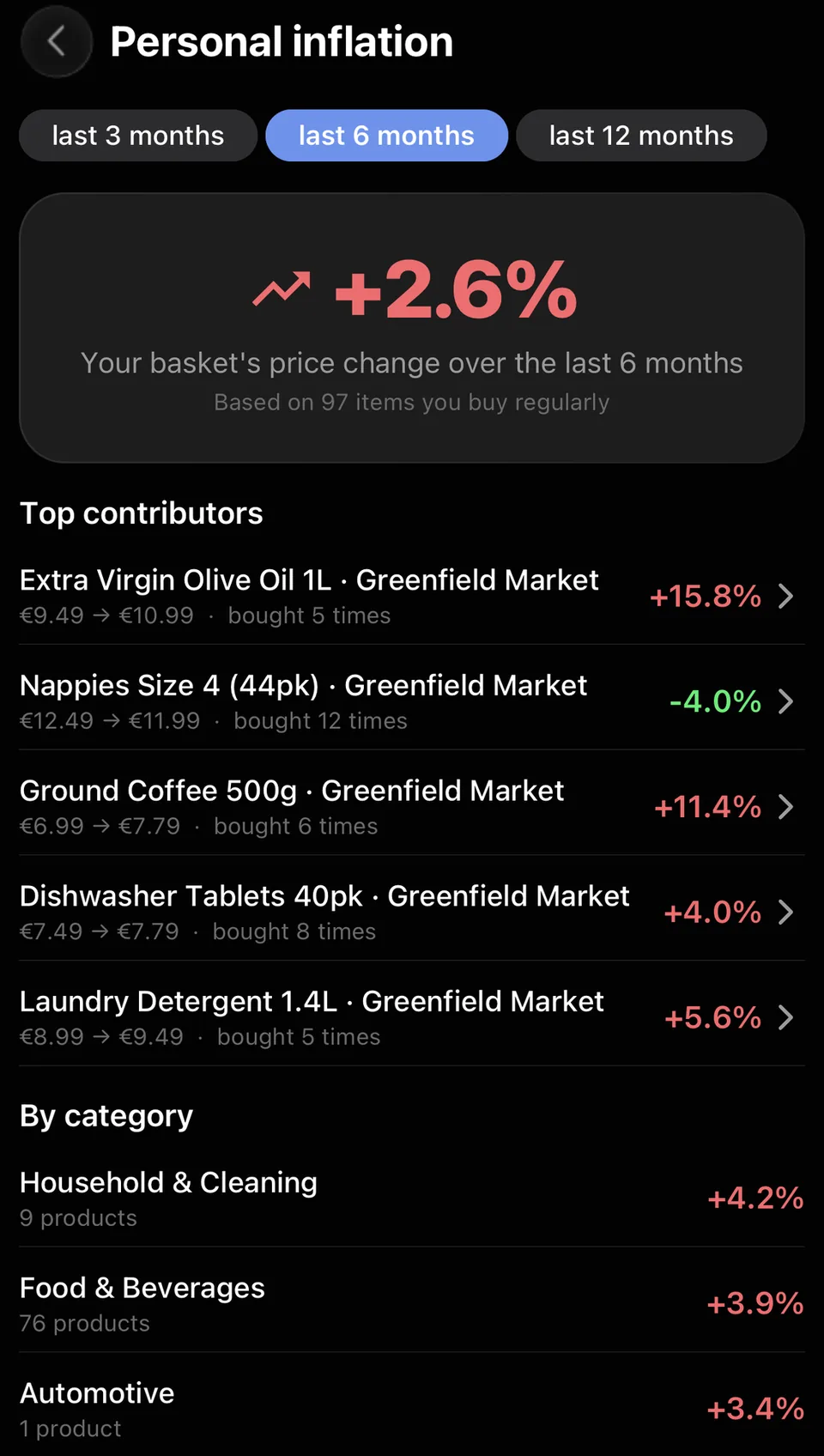
Your personal inflation rate is how much the prices of the things you actually buy have changed, measured on your own receipts instead of a national average basket. ReceiptStorm calculates it once you have repeat purchases and shows which grocery price increases are behind it: in the example on this page, +2.6% over the last 6 months, with olive oil and coffee among the biggest increases. Here is how to find it, how it is calculated and how to read it.
What personal inflation means
Official inflation follows a national basket of goods and services. Your basket is different: you buy certain products, at certain stores, in your own amounts. If coffee and olive oil rise faster than prices in general and you buy both every week, your costs rise faster than the headline figure suggests. If the things you buy hold their price, your rate can sit below it.
Personal inflation in ReceiptStorm compares what you paid for the same product at the same store in two periods. It uses only your receipts, plus your household's if you share one. No other users' prices and no national statistics are mixed in, so it doesn't replace the official rate. It answers a narrower question: how much more are you paying for the things you buy?
How to see your personal inflation rate
Build up a few months of receipts
The rate needs products you buy again and again. Save your receipts as you shop, by photo, QR code (in Serbia) or manual entry; getting started explains each way.
Find the card on Home
Scroll down Home to the Personal inflation card. It shows your rate for the last 6 months and how many products it is based on, and it appears by itself once there is enough data.
Pick a period
Tap the card and choose Last 3 months, Last 6 months or Last 12 months at the top.
Read the details
Below the headline come Top contributors, By category and By store, then a short explanation of the method.
Check the receipts behind a product
Tap a contributor to see every purchase in its rate, split into Current window and Baseline window. Rows marked off-trend are left out of the calculation, and each row opens its receipt.
How the personal inflation rate is calculated
The method is built to measure price changes, not changes in what or where you buy:
- The period is split in two halves. The Last 6 months option compares the most recent 90 days with the 90 days before them; 3 and 12 months work the same way.
- Each product is tracked per store. Milk at one store and the same milk at another are separate entries, so switching to a cheaper store doesn't show up as falling prices.
- Prices are unit prices from your receipts: two cartons at €2.29 each count as €2.29, not €4.58.
- For each product and half, the app takes the typical (median) price. With three or more purchases in a half, prices more than 50% away from that typical price are dropped as likely scan errors.
- A product counts only with at least 2 purchases in each half. Changes above +200% or below −50% are set aside under Possible data issues.
- The overall rate weights each product by its price and by how often you buy it, and it needs at least 3 qualifying products.
- Only purchases count. Bills, rent and subscriptions are left out.
- Product
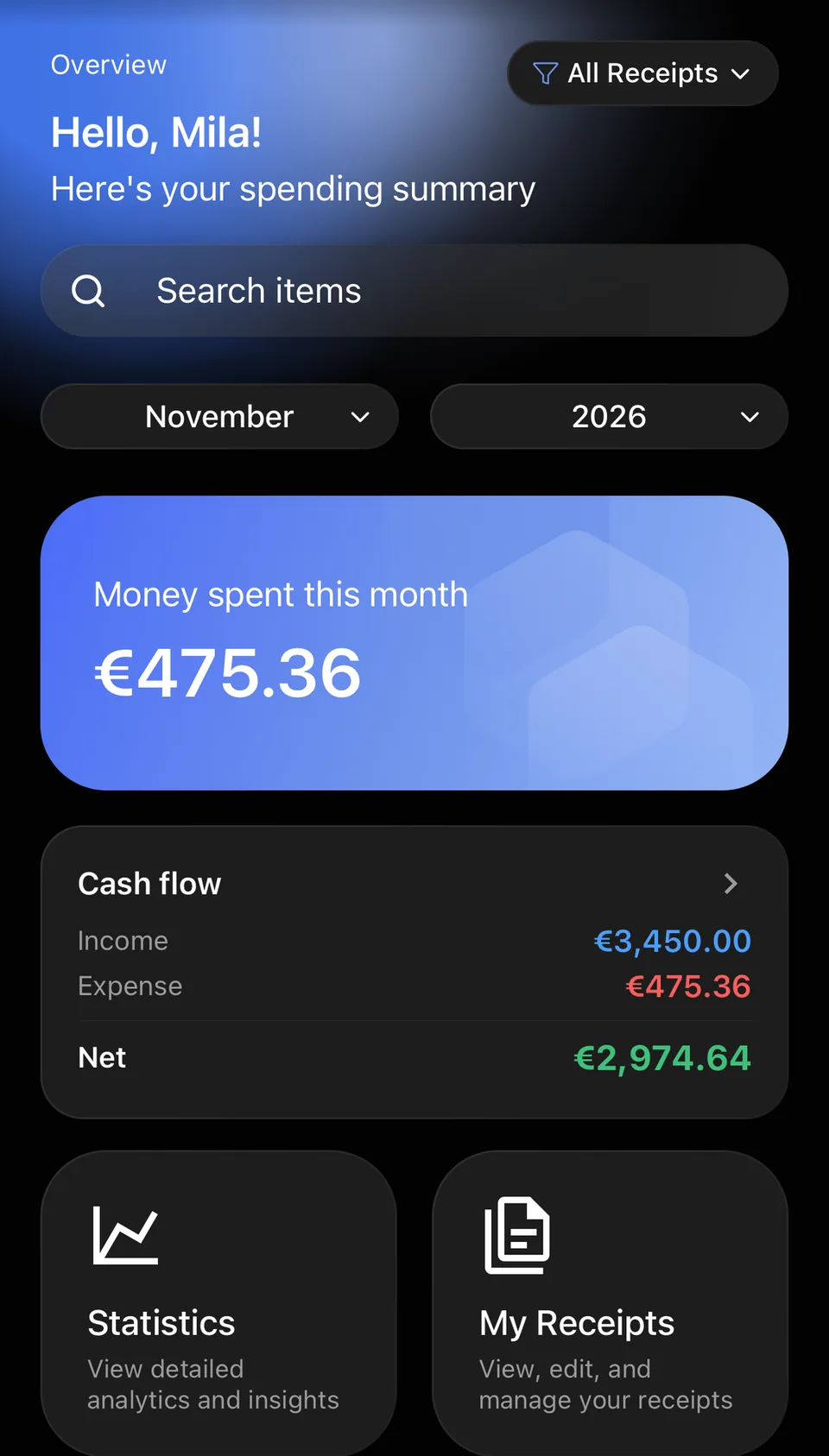
- Extra Virgin Olive Oil 1L at Greenfield Market
- Typical price, older half
- €9.49
- Typical price, recent half
- €10.99
- Difference
- +€1.50
- Change
- €1.50 ÷ €9.49 = +15.8%
- Purchases in the period
- 5
Top contributors are ranked by impact: the price change in money multiplied by how often you buy the product. That's why Nappies Size 4 (44pk), bought 12 times, ranks second although its price fell from €12.49 to €11.99 (−4.0%). Across all 97 products in this example, the rate comes to +2.6%.
How to read top contributors, categories and stores
Top contributors lists up to five products with the biggest impact on your rate, each with its old and new typical price and the number of times you bought it. By category applies the same formula to every category: in the example, Household & Cleaning rose 4.2% across 9 products and Food & Beverages 3.9% across 76 products. By store does the same per store, so you can see where prices moved most for the things you buy there.
Tip
Something odd under Possible data issues? It usually means a multipack and a single unit were saved under the same name, or a scan picked up the wrong price. Tap the product to see its purchases, open the receipt that looks wrong, fix the quantity or price and tap Save Changes; the rate is recalculated with the corrected purchase.
Why your rate differs from official inflation
| Aspect | Official inflation | Your personal inflation |
|---|---|---|
| Basket | A national basket of goods and services | Products you buy repeatedly |
| Prices | Collected across the country | Unit prices from your own receipts |
| Stores | Many stores, averaged | Each store tracked on its own |
| Period | Usually year over year | Two halves of the period you pick: 3, 6 or 12 months |
So don't expect the two numbers to match. Your rate can be well above the official one when the products you buy got more expensive, below it when their prices held, and it can even be negative. One-off promotions don't throw it off much, because a typical (median) price isn't pulled around by a single deal.
Tips for a more reliable rate
- Save receipts from your regular stores every time. Gaps leave products without two purchases in each half.
- Use Last 12 months for a steadier number and Last 3 months to catch recent price increases sooner.
- Keep Language for item names the same. A change applies only to new receipts, so one product can end up under two names and drop out of the comparison.
- Fix wrong quantities or prices while reviewing a scan. They are what usually causes odd results.
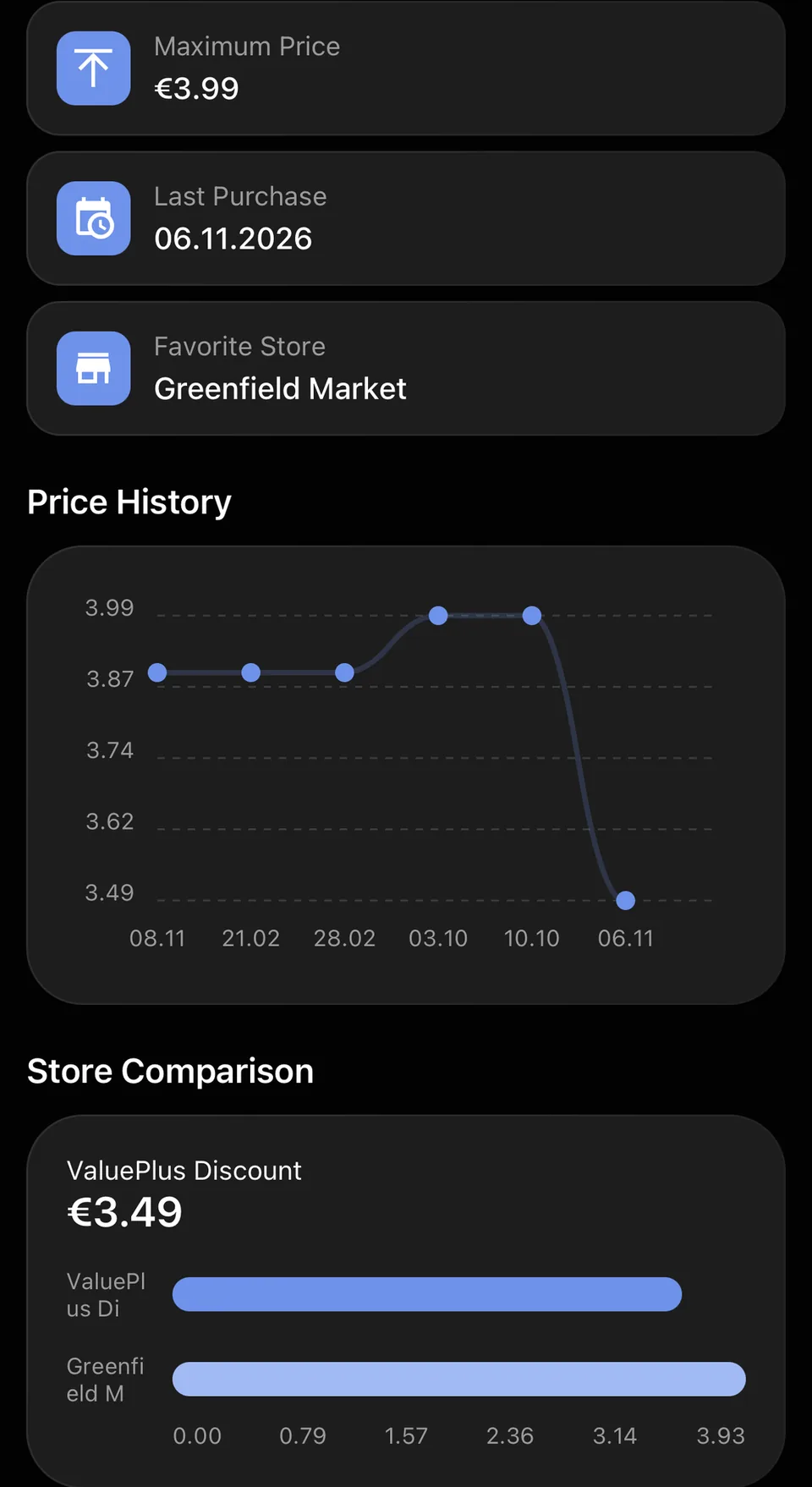
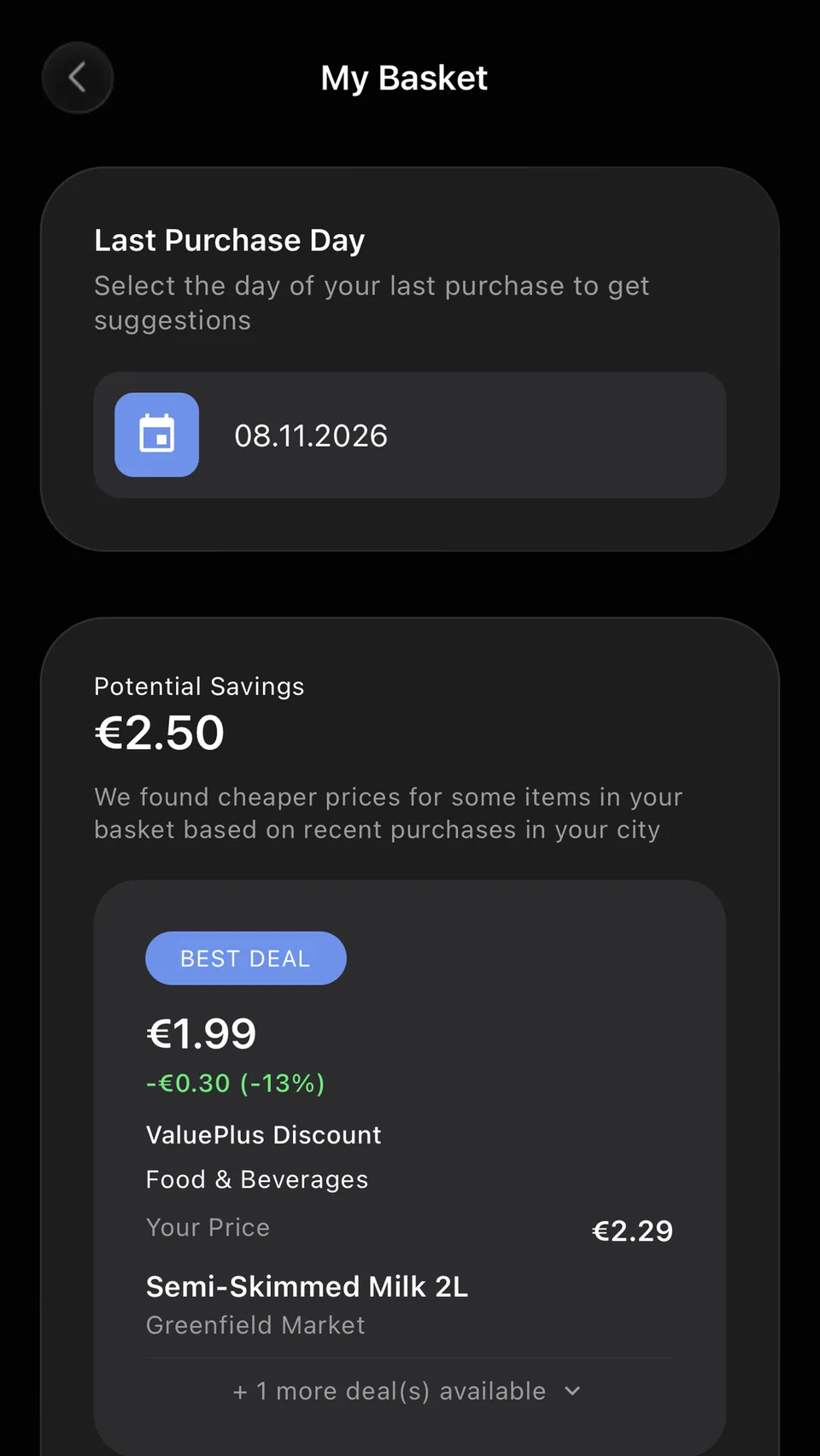
- Follow one product in detail with price history and store comparison, and on Pro or Ultra, look for lower prices before your next shopping trip with My Basket.
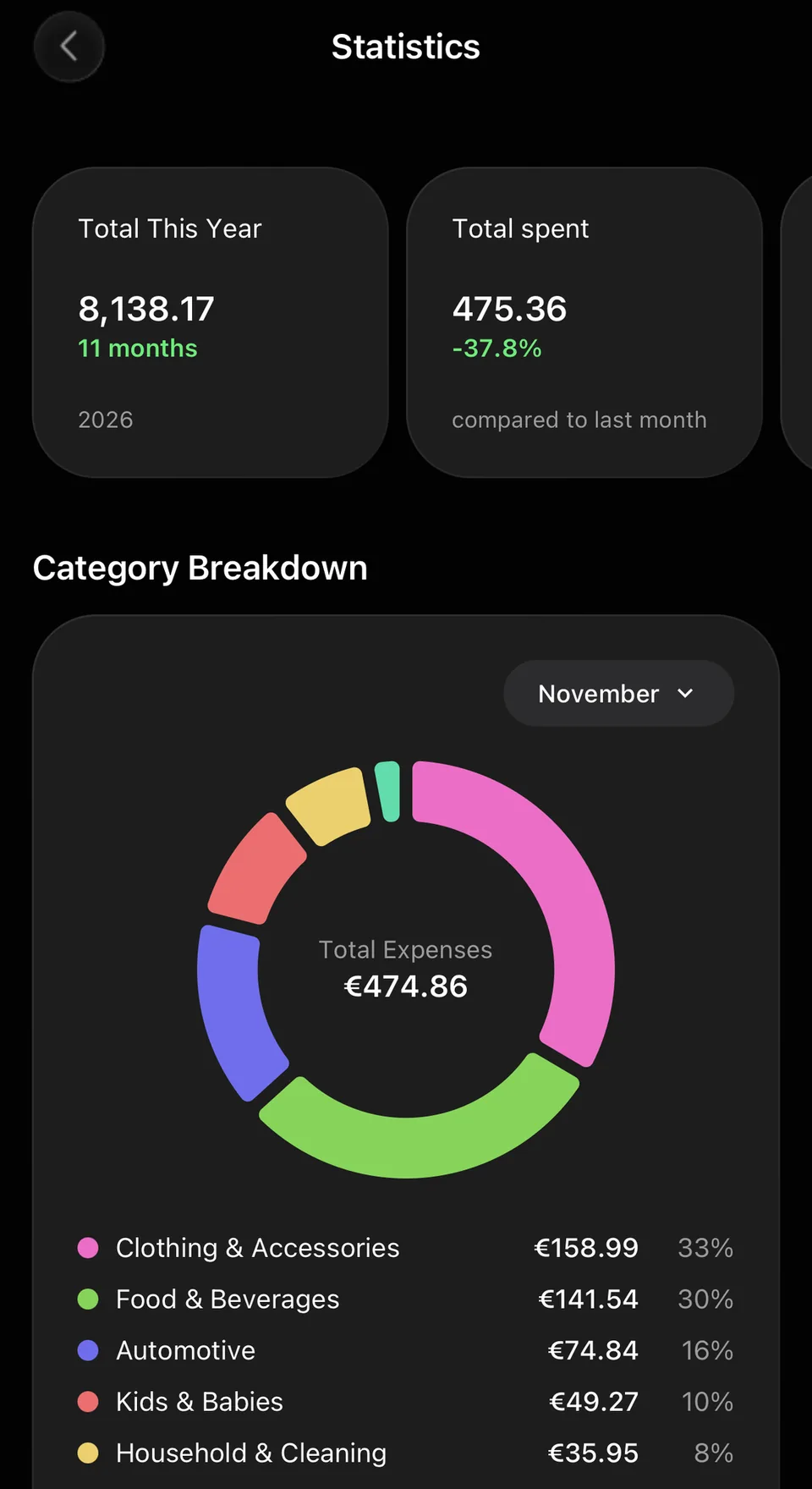
- See where the rest of your money goes with spending by category.
See your own spending, item by item
ReceiptStorm is free to download for iPhone and Android.



Frequently asked questions
How is personal inflation different from the consumer price index?
The consumer price index measures a national average basket. Your personal inflation uses only the products you buy repeatedly, at the stores where you buy them, from your own receipts.
Why don't I see the Personal inflation card on Home?
There isn't enough data yet. The card needs at least 3 products, each bought at least twice in the older 90 days and twice in the recent 90 days at the same store. It appears by itself once you get there. If the Home filter is set to one group, such as Business, only those receipts count.
Does personal inflation include rent, bills or subscriptions?
No. Only purchases from your receipts count. Bills and payments you track are left out, even when they count in your spending.
Is the personal inflation calculator free?
Yes, personal inflation works on every plan, including Free. The plans differ in AI photo scans and extras such as My Basket (Pro and Ultra); compare the plans.
Can my personal inflation rate be negative?
Yes. If the products you buy got cheaper on balance at the stores where you buy them, the rate shows a negative number.